




What are the quality control standards for KPV 10 Mg?
 Dec 15, 2025|
 What are the quality control standards for KPV 10 Mg?
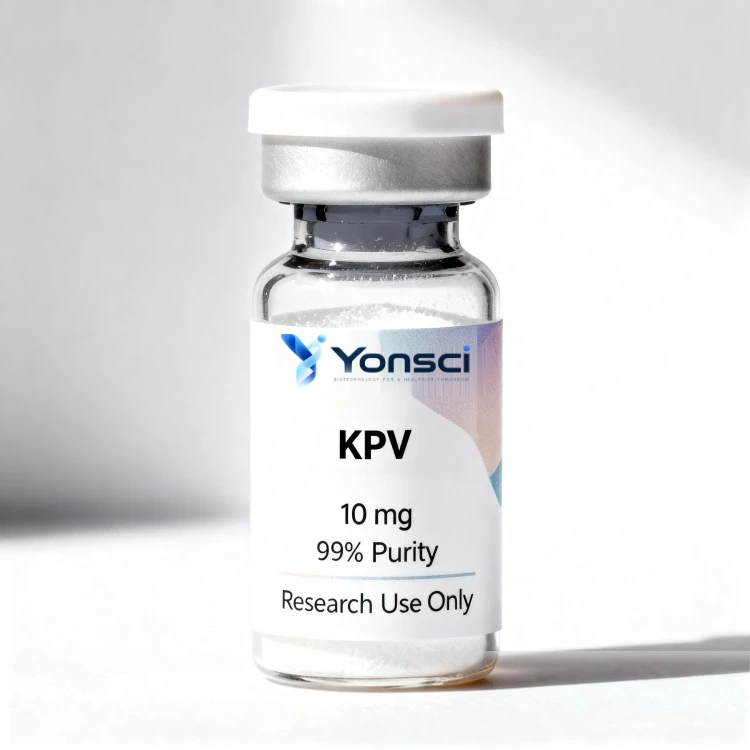
As a supplier of KPV 10 Mg, I understand the critical importance of maintaining high - quality control standards. KPV, a peptide known for its potential anti - inflammatory properties, has gained significant attention in the research community. Ensuring that our KPV 10 Mg product meets strict quality benchmarks is not only a matter of regulatory compliance but also a commitment to providing reliable and effective substances for scientific exploration.
Purity
One of the most fundamental quality control standards for KPV 10 Mg is purity. Purity refers to the percentage of the active ingredient (KPV) in the product, free from contaminants and impurities. In our production process, we aim for a purity level of at least 98%. This high - purity standard is achieved through a series of sophisticated purification techniques.
We start with high - quality raw materials. The amino acids used to synthesize KPV are carefully selected from trusted suppliers. These raw materials are then subjected to strict quality checks before entering the synthesis process. During synthesis, we use solid - phase peptide synthesis (SPPS), a well - established method in peptide production. This method allows for precise control over the sequence and length of the peptide, minimizing the formation of incorrect or incomplete peptides.
After synthesis, the crude KPV peptide undergoes purification steps such as high - performance liquid chromatography (HPLC). HPLC separates the desired KPV peptide from other by - products and impurities based on their different chemical properties. The purified peptide is then analyzed using mass spectrometry to confirm its identity and molecular weight, and HPLC to determine its purity. Only when the purity meets our 98% standard or higher is the product considered suitable for further processing and packaging.
Identity and Structure
Confirming the identity and structure of KPV 10 Mg is another crucial quality control aspect. We use a combination of analytical techniques to ensure that the product we supply is indeed KPV with the correct amino acid sequence (Lys - Pro - Val).

Nuclear magnetic resonance (NMR) spectroscopy is one of the key techniques we employ. NMR provides detailed information about the molecular structure of the peptide, including the connectivity between atoms and the spatial arrangement of the amino acids. By comparing the NMR spectrum of our KPV product with the reference spectrum of a known pure KPV sample, we can verify its identity and confirm that the structure is correct.
In addition to NMR, we also use amino acid analysis. This technique involves hydrolyzing the peptide into its individual amino acids and then quantifying each amino acid using chromatography. The results of amino acid analysis should match the expected amino acid composition of KPV, further validating its identity.
Potency
Potency refers to the biological activity of KPV 10 Mg. While the exact mechanism of action of KPV is still under investigation, it is believed to exert its anti - inflammatory effects through various pathways. To assess the potency of our KPV product, we conduct in - vitro assays using cell - based models.
For example, we use macrophage cell lines to evaluate the anti - inflammatory activity of KPV. Macrophages are immune cells that play a key role in the inflammatory response. When stimulated with lipopolysaccharides (LPS), macrophages produce pro - inflammatory cytokines such as tumor necrosis factor - alpha (TNF - α) and interleukin - 6 (IL - 6). We treat the LPS - stimulated macrophages with our KPV 10 Mg product and measure the levels of TNF - α and IL - 6 using enzyme - linked immunosorbent assays (ELISA). A reduction in the production of these pro - inflammatory cytokines indicates the anti - inflammatory potency of KPV.
We also compare the potency of our product with a reference standard to ensure consistency in activity. This allows us to guarantee that our KPV 10 Mg product has the expected biological effects and can be relied upon for research purposes.
Stability
Stability is an important consideration for any peptide product, including KPV 10 Mg. Peptides can be susceptible to degradation due to factors such as temperature, pH, and oxidation. To ensure the stability of our KPV product, we conduct stability studies under different storage conditions.
We store samples of KPV 10 Mg at different temperatures (e.g., 4°C, 25°C, and 40°C) and at different relative humidities for extended periods. At regular intervals, we analyze the samples using HPLC and other analytical techniques to monitor changes in purity, identity, and potency. Based on the results of these stability studies, we can determine the appropriate storage conditions and shelf - life of our product.
We also use appropriate packaging materials to protect KPV from environmental factors. Our KPV 10 Mg is typically packaged in air - tight vials made of high - quality glass or plastic, which are designed to prevent moisture, oxygen, and light from reaching the product.
Microbiological Purity
Microbiological purity is essential to ensure the safety and reliability of KPV 10 Mg. Contamination with bacteria, fungi, or other microorganisms can not only affect the quality of the product but also pose a risk to the research environment.
We follow strict aseptic techniques during the production process to minimize the risk of microbiological contamination. The production facilities are regularly cleaned and disinfected, and the personnel are trained in proper hygiene practices.
We also conduct microbiological testing on our KPV products. This includes testing for total aerobic microbial count, yeast and mold count, and the presence of specific pathogens such as Escherichia coli, Staphylococcus aureus, and Pseudomonas aeruginosa. Our products must meet strict microbiological limits to be considered suitable for distribution.
It's important to note that our quality control standards are not limited to KPV 10 Mg. We also apply similar rigorous standards to other products such as TB - 500 5mg and Ara - 290 5mg, ensuring that all our offerings are of the highest quality for scientific research.
In conclusion, as a supplier of KPV 10 Mg, we are committed to upholding the highest quality control standards. Our comprehensive quality control measures, including purity, identity, potency, stability, and microbiological purity, ensure that our KPV 10 Mg product is reliable, safe, and effective for scientific research.
If you are interested in purchasing KPV 10 Mg or any of our other products for your research needs, we invite you to contact us for further discussions. We are more than happy to provide you with detailed product information, samples, and pricing. Let's work together to advance scientific knowledge in the field of anti - inflammatory research.
References
- Alberts, B., Johnson, A., Lewis, J., Raff, M., Roberts, K., & Walter, P. (2002). Molecular Biology of the Cell. Garland Science.
- Murray, R. K., Bender, D. A., Botham, K. M., Kennelly, P. J., Rodwell, V. W., & Weil, P. A. (2006). Harper's Illustrated Biochemistry. McGraw - Hill Medical.
- Voet, D., Voet, J. G., & Pratt, C. W. (2008). Fundamentals of Biochemistry: Life at the Molecular Level. Wiley.

