




Retatrutide vs. Tirzepatide: The Next Evolution of Multi-Hormonal Metabolic Therapies
 Nov 20, 2025|
 Introduction: A New Era in Metabolic Medicine
In the last few years, incretin-based therapies have completely reshaped the landscape of obesity, metabolic syndrome, and type 2 diabetes management. Two of the most widely discussed next-generation agents are retatrutide and tirzepatide - powerful multi-receptor agonists designed to target the underlying hormonal drivers of appetite, glucose control, and energy regulation.
Unlike earlier GLP-1–only approaches, these new agents target multiple gut-derived hormone receptors simultaneously. This is one reason they deliver unprecedented metabolic results.
This article breaks down how each one works, how they compare, what the data shows, and why experts believe these molecules represent the future of obesity treatment.
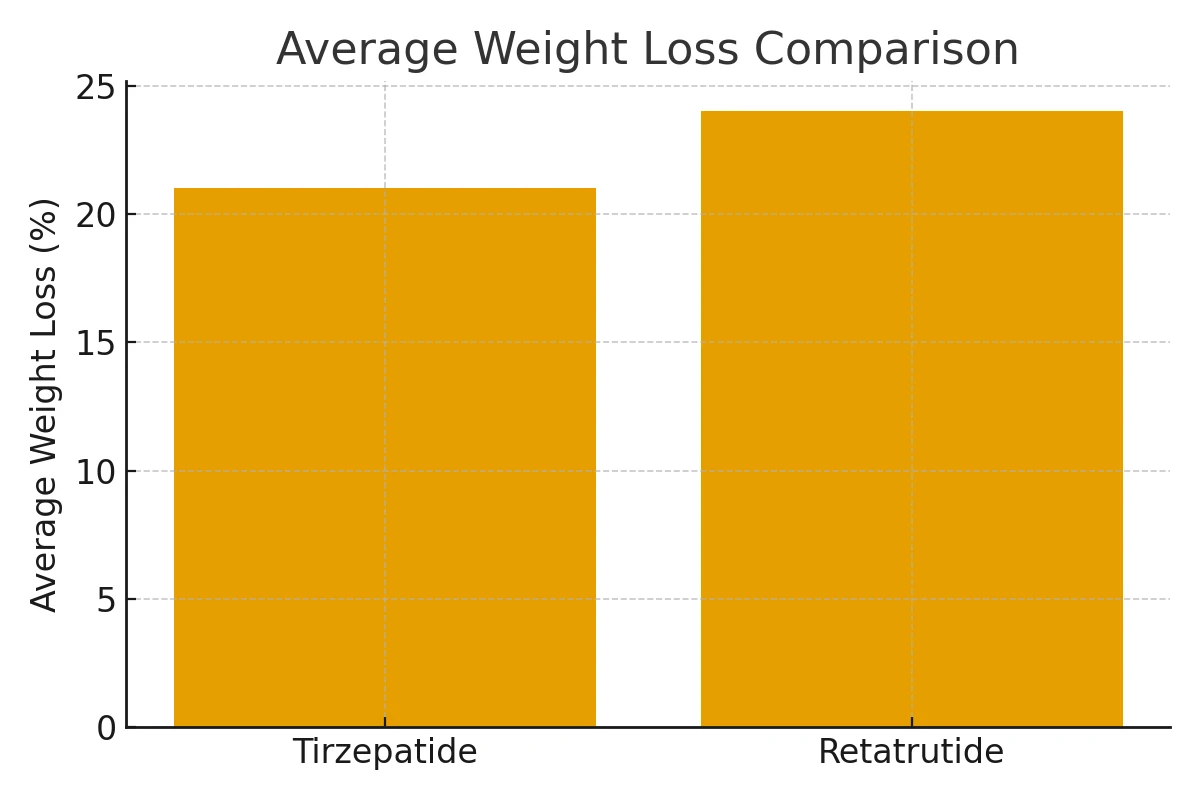
Quick Infographic: Average Weight-Loss Comparison
Below is a simple visual comparing typical weight-loss ranges reported in clinical research settings.
What Makes These Two Molecules Special?
1. Tirzepatide - Dual Receptor Activator
Targets:
GLP-1 receptor
GIP receptor
What this means:
By activating both GLP-1 and GIP receptors, tirzepatide improves insulin secretion, slows gastric emptying, and reduces appetite - resulting in powerful weight-loss and metabolic benefits.
2. Retatrutide - Triple Receptor Activator
Targets:
GLP-1 receptor
GIP receptor
Glucagon receptor
Why this matters:
The triple activation appears to combine appetite reduction with increased energy expenditure, potentially producing even greater weight reduction.
Side-By-Side Comparison
| Feature | Tirzepatide | Retatrutide |
|---|---|---|
| Receptors activated | GLP-1 + GIP | GLP-1 + GIP + Glucagon |
| Typical weight reduction (clinical research settings) | ~20–22% | ~22–24% |
| Appetite suppression | Strong | Very strong |
| Energy expenditure boost | Mild | Moderate (due to glucagon activity) |
| Glucose control | Excellent | Excellent |
| Gastrointestinal side effects | Common | Common–moderate |
| Stage of development | Approved in multiple countries | Investigational |
(Values are generalized summaries of published data; individual results vary.)
How Multi-Receptor Therapies Produce Such Big Results
These agents work by mimicking multiple gut hormones that regulate:
✔ Appetite & satiety
Reducing hunger signals and slowing gastric emptying.
✔ Insulin release & glucose control
Enhancing glucose-stimulated insulin secretion.
✔ Metabolic rate & fat oxidation
Especially with glucagon receptor activation, as seen in retatrutide.
✔ Body-fat reduction over lean-mass loss
Clinical data suggests a healthier composition shift compared with crash diets.
📉 Safety & Side Effects
The most common effects reported for both molecules include:
Nausea
Reduced appetite
Diarrhea or constipation
Fatigue in some users
Heart-rate elevation (dose-dependent, especially with glucagon activity)
Monitoring by a healthcare professional is essential, especially during dose-escalation phases.
Future Outlook: What Experts Predict
1. Retatrutide may redefine the upper limits of weight loss
Triple-hormone activation is one of the most promising fronts in obesity therapeutics.
2. Tirzepatide may remain the more accessible option
It's authorized in many regions and has extensive real-world data.
3. Personalized metabolic medicine is coming
Future treatment plans may be tailored by genetics, hormone response, and microbiome profiles.
Final Thoughts
Retatrutide and tirzepatide represent two of the most important breakthroughs in modern metabolic science. Their multi-hormonal mechanisms allow them to deliver results previously thought impossible with medication alone.
As research progresses, we may soon see a world where obesity is treated not as a moral failing, but as a complex biological condition with powerful, targeted tools - and these agents are leading that transformation.

